Best Image Annotation Tools for Machine Learning
A practical comparison of the leading image annotation platforms for computer vision — what each one is actually good at, and where they fall short.
Picsellia Team
·4 min read
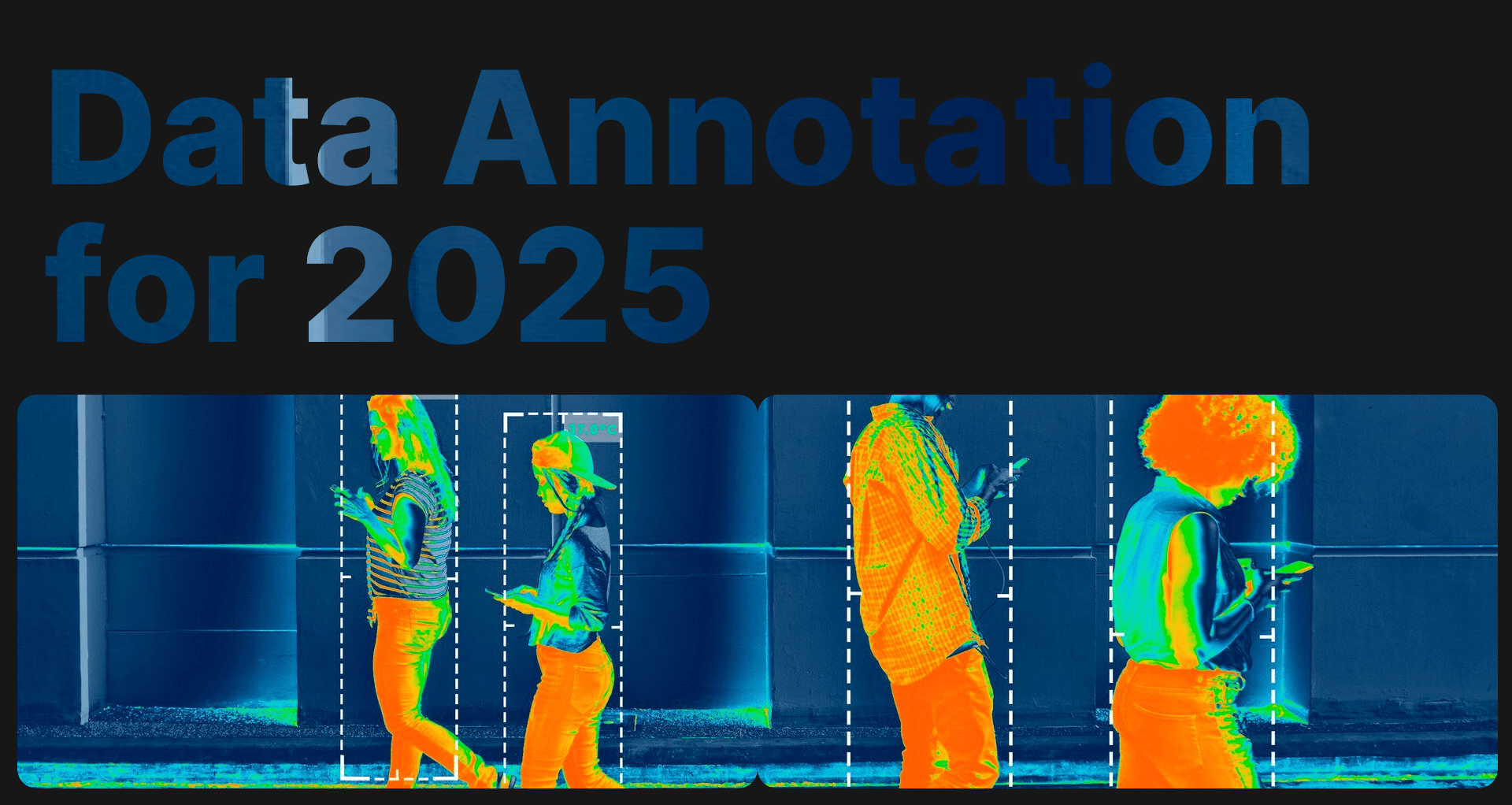
Ready to build computer vision?
Go from raw images to production models. Free trial, no credit card, cancel anytime.
Annotation quality is usually the single biggest lever on a computer vision model's final performance — more than architecture choice, more than hyperparameter tuning. A model can only be as good as the labels it learned from, and the tool you annotate in shapes everything downstream: how fast you can label, how consistent your annotators are with each other, and how much of that early labeling actually survives as usable data once you scale up.
Here's an honest look at the tools teams actually use, and what each one is genuinely good at.
Picsellia
Picsellia's labeling tool supports bounding boxes, polygons, segmentation masks, and keypoints, with AI-assisted pre-labeling to speed up the first pass on a new dataset. What sets it apart from a standalone annotation tool is that labeling isn't a separate step you export from — it's directly connected to dataset versioning, training, and deployment in the same pipeline, so a labeling correction updates the dataset version everything downstream trains against.
Advantages:
- Multi-format annotation (bounding boxes, polygons, segmentation, keypoints) with AI-assisted pre-labeling.
- Built-in review and consensus workflows for catching labeling errors before they reach training.
- Annotated data flows directly into dataset versioning and training — no export/import step between labeling and the rest of the pipeline.
- Annotation campaigns with dedicated tooling for managing distributed or outsourced labeling teams.
CVAT
The Computer Vision Annotation Tool is open source and free to self-host, which makes it the default choice for teams that want full control over their annotation infrastructure with no vendor relationship at all. It supports a wide range of annotation types across images and video, including interpolation between frames for video tracking tasks, and has one of the largest and most active open-source communities of any tool on this list.
Advantages:
- Free and open source, with no per-seat or per-image cost if self-hosted.
- Strong video annotation support, including frame interpolation for tracking tasks.
- Large, active community and frequent updates.
- Full control over data — nothing leaves your own infrastructure.
Labelbox
Labelbox is one of the longest-established annotation platforms, built around a data-centric AI philosophy — the idea that improving data quality is often a higher-leverage investment than tuning the model itself. It's particularly strong on quality control: consensus scoring across multiple annotators, benchmark and gold-standard datasets to measure annotator accuracy, and detailed audit trails for regulated industries.
Advantages:
- Strong quality control tooling: consensus scoring, benchmarks, and annotator performance tracking.
- Model-assisted labeling to accelerate large annotation projects.
- Mature enterprise features — SSO, audit trails, role-based access.
- Broad format support across images, video, and text.
Encord
Encord is built around data-centric AI for more complex data types than standard images — video, DICOM medical imaging, and multi-sensor data in particular. If your annotation needs go beyond flat images into video sequences or specialized formats like medical scans, Encord's tooling is purpose-built for that rather than adapted from a general-purpose image annotator.
Advantages:
- Purpose-built support for video and DICOM medical imaging annotation.
- Automated pre-labeling and model-in-the-loop workflows to speed up iteration.
- Strong data quality and curation tooling alongside annotation itself.
- Good fit for multi-sensor or non-standard data pipelines.
SuperAnnotate
SuperAnnotate focuses heavily on workflow automation and quality control for teams running large, often distributed or outsourced annotation operations. If your bottleneck is managing dozens or hundreds of annotators consistently — not the annotation UI itself — SuperAnnotate's project management and QA tooling is built specifically for that scale.
Advantages:
- Workflow automation designed for large, distributed annotation teams.
- Quality control and annotator performance tooling at scale.
- Broad format support including images, video, text, and LiDAR.
- Integration options for connecting annotation output directly to training pipelines.
How to choose
If annotation is one stage in a pipeline you want fully connected — versioning, training, deployment, monitoring, all sharing the same lineage — that's what Picsellia is built for. If you want full infrastructure control and zero cost beyond hosting, CVAT is the clear choice. If your bottleneck is quality control across a large or distributed annotation workforce, Labelbox or SuperAnnotate are built for exactly that. If your data is video-heavy or includes specialized formats like medical imaging, Encord is worth a close look.
Whichever tool you start with, the same rule holds: annotation quality is worth investing in as seriously as model architecture, because no amount of tuning downstream fixes labels that were wrong to begin with. Explore Picsellia's labeling tool, or start a free trial to see how it connects to the rest of the pipeline.
Related from Picsellia
Annotate faster with AI assistance
Picsellia's labeling tool supports bounding boxes, polygons, and segmentation masks with built-in AI assistance to speed up annotation.
Explore the Labeling ToolTrack every experiment
Log metrics, parameters, and artifacts automatically. Compare runs side by side and ship better models faster.
See Experiment TrackingStay up to date
Get the latest posts on computer vision, MLOps, and AI delivered to your inbox.
Related articles
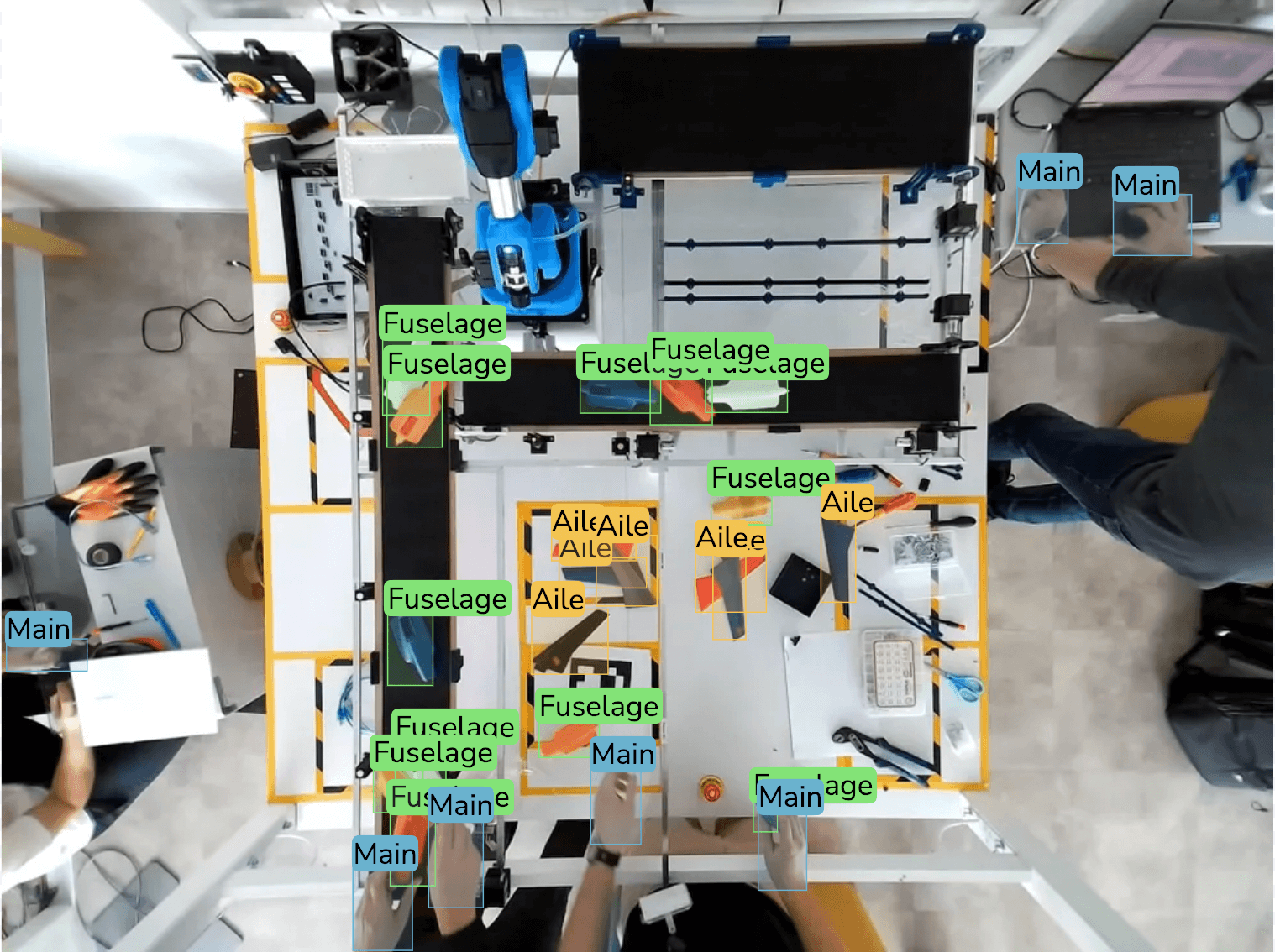
Computer Vision Use Cases by Industry: The Complete Guide
A practical breakdown of how computer vision is actually used across manufacturing, agriculture, healthcare, retail, logistics, security, and more — with the real problems it solves in each.
Roboflow Alternatives for Enterprise Computer Vision Teams
Roboflow is a strong starting point for computer vision prototyping. Here's an honest look at the alternatives teams evaluate once they need enterprise deployment, on-premise infrastructure, or a full MLOps pipeline.
From Computer Vision to Industry 4.0: How Scortex Is Shaping Automated Visual Inspection
Discover how Scortex leverages AI and computer vision for automated visual inspection, from defect detection to anomaly detection and real-time insights.