Roboflow Alternatives for Enterprise Computer Vision Teams
Roboflow is a strong starting point for computer vision prototyping. Here's an honest look at the alternatives teams evaluate once they need enterprise deployment, on-premise infrastructure, or a full MLOps pipeline.
Picsellia Team
·6 min read
Ready to build computer vision?
Go from raw images to production models. Free trial, no credit card, cancel anytime.
Roboflow has become one of the default starting points for computer vision projects — a large open dataset library, a fast annotation workflow, and a developer experience built for getting a model trained and deployed quickly. For prototyping, individual developers, and small teams, that's a genuinely good fit.
The alternatives conversation usually starts later, when a team hits one of a handful of walls: they need on-premise or air-gapped deployment for compliance reasons, they need a full pipeline (data management through production monitoring) rather than a toolkit they have to wire together themselves, or they've outgrown a developer-community tool and need enterprise support, SSO, and audit trails. This is a rundown of where teams actually go next — including where Roboflow itself might still be the right call.
At a glance
- Picsellia — data, annotation, training, deployment, and monitoring in one pipeline. Cloud, on-premise, or hybrid. Best for full-lifecycle CVOps with ISO 27001 compliance.
- Roboflow — data prep, annotation, and training. Cloud only. Best for fast prototyping and a developer-community workflow.
- Labelbox — annotation and data-centric AI. Cloud only. Best for annotation quality and reviewer workflows.
- Encord — annotation for complex data types (video, DICOM). Cloud only. Best for non-standard data.
- CVAT — annotation. Self-hosted, open source. Best for full infrastructure control and zero vendor lock-in.
- SuperAnnotate — annotation with workflow automation. Cloud only. Best for high-volume, distributed labeling teams.
- V7 — annotation with automation. Cloud only. Best for medical and scientific imaging.
- Scale AI — outsourced labeling and data evaluation. Cloud / managed workforce. Best for teams that want to outsource labeling entirely rather than run it in-house.
- Datature — data, training, and deployment. Cloud only. Best for a lightweight end-to-end workflow without enterprise overhead.
What to evaluate alternatives on
Before the list, the criteria that actually separate these platforms in practice:
- Pipeline coverage — does the tool stop at annotation, or does it cover training, deployment, and production monitoring too?
- Deployment model — cloud-only, or can it run on-premise / air-gapped for regulated or security-sensitive environments?
- Open source vs. managed — full control and no vendor lock-in, vs. less infrastructure to run yourself.
- Team and governance features — SSO, role-based access control, audit trails — table stakes for a security review at any mid-size or larger company.
Picsellia
Full-lifecycle CVOps platform: data management, annotation, training, deployment, and production monitoring in one system, with ISO 27001 certification and on-premise or hybrid deployment options. The tradeoff against Roboflow is the same tradeoff you'll see with most of the platforms below it in this list — Picsellia is built for teams that want the entire pipeline in one place with shared data lineage, not a fast way to get a first model trained. See the detailed Picsellia vs. Roboflow comparison for a feature-by-feature breakdown.
Labelbox
One of the longest-established players in the space, Labelbox is primarily an annotation and data-centric AI platform with strong tooling for label quality and review workflows. It's a natural alternative if annotation quality and reviewer workflows are your main pain point, though — like Roboflow — training, deployment, and monitoring generally mean bringing in separate tools. See the Picsellia vs. Labelbox comparison.
Encord
Positioned around data-centric AI and annotation for complex data types (video, DICOM medical imaging, multi-sensor data), Encord is a strong fit for teams working with data types beyond standard images. Similarly to Labelbox, it's focused on the data and annotation stage rather than the full MLOps lifecycle. See the Picsellia vs. Encord comparison.
CVAT
The Computer Vision Annotation Tool is open source and free to self-host, which makes it a common choice for teams that want full control over their infrastructure and don't want any vendor relationship at all for the annotation layer. The tradeoff is that everything past annotation — training pipelines, deployment, monitoring — is on you to build or integrate separately, and self-hosting means your team owns uptime, scaling, and security patching.
SuperAnnotate
An annotation platform with a strong focus on workflow automation and quality control for large annotation teams, often used by companies running high-volume, outsourced, or distributed labeling operations. Like most annotation-first tools, it pairs well with a separate training and deployment stack rather than replacing one.
V7
Known for annotation tooling aimed at complex use cases, including medical and scientific imaging, with automation features to speed up labeling on specialized data types. Another strong option if your primary bottleneck is annotation throughput and quality on non-standard imagery specifically.
Scale AI
Originally built around outsourced, human-in-the-loop data labeling at very large scale, Scale has expanded into broader AI data and evaluation tooling. It's a fit for teams that want to outsource the labeling workforce itself rather than run annotation in-house, which is a different axis of "alternative" than the tools above.
Datature
A newer entrant focused on making the full train-to-deploy workflow more accessible, with an emphasis on ease of use for teams without a dedicated MLOps function. Worth evaluating if you want something more end-to-end than Roboflow but with a lighter footprint than an enterprise platform.
How to actually choose
If you're still prototyping or working solo, Roboflow, CVAT, or Datature are reasonable starting points — optimize for speed of getting to a first working model. If annotation quality and reviewer workflows are the bottleneck specifically, Labelbox, Encord, SuperAnnotate, or V7 are built for exactly that. If you're past prototyping and need one platform covering data management through production monitoring — especially with on-premise deployment, ISO 27001 or similar compliance requirements, or a team that doesn't want to stitch together five separate tools — that's the case Picsellia is built for.
The honest version of this advice: the tool that got you to a working prototype is rarely the tool you run in production at scale, and that's true of every platform in this list, not just Roboflow. Talk to us about where your team actually is, or start a free trial to see the full pipeline directly.
Related from Picsellia
Orchestrate annotation at scale
Run multi-step annotation campaigns with built-in quality control, team management, and progress tracking.
Discover Annotation CampaignsAnnotate faster with AI assistance
Picsellia's labeling tool supports bounding boxes, polygons, and segmentation masks with built-in AI assistance to speed up annotation.
Explore the Labeling ToolStay up to date
Get the latest posts on computer vision, MLOps, and AI delivered to your inbox.
Related articles
Best Image Annotation Tools for Machine Learning
A practical comparison of the leading image annotation platforms for computer vision — what each one is actually good at, and where they fall short.
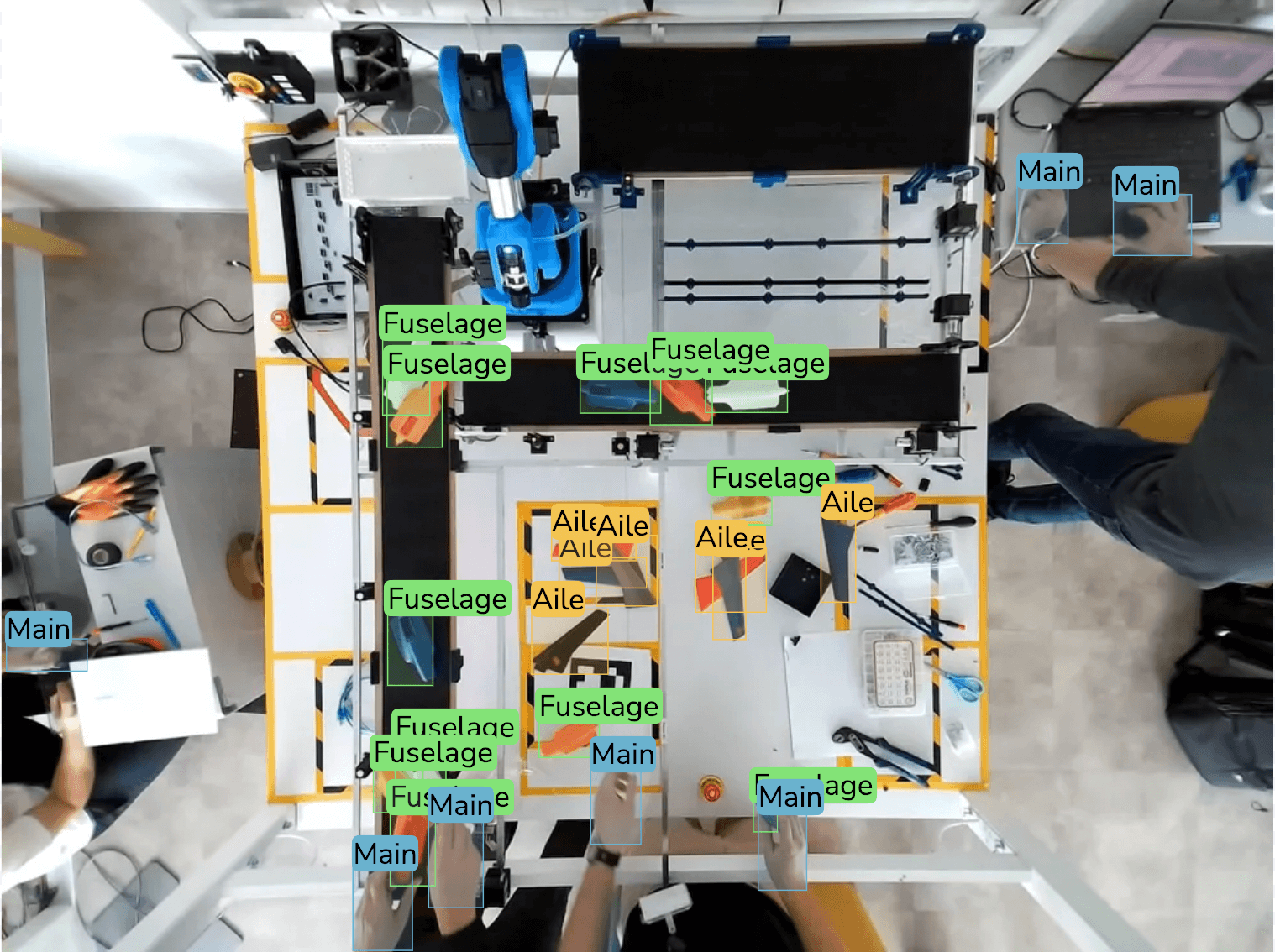
Computer Vision Use Cases by Industry: The Complete Guide
A practical breakdown of how computer vision is actually used across manufacturing, agriculture, healthcare, retail, logistics, security, and more — with the real problems it solves in each.
From Computer Vision to Industry 4.0: How Scortex Is Shaping Automated Visual Inspection
Discover how Scortex leverages AI and computer vision for automated visual inspection, from defect detection to anomaly detection and real-time insights.